


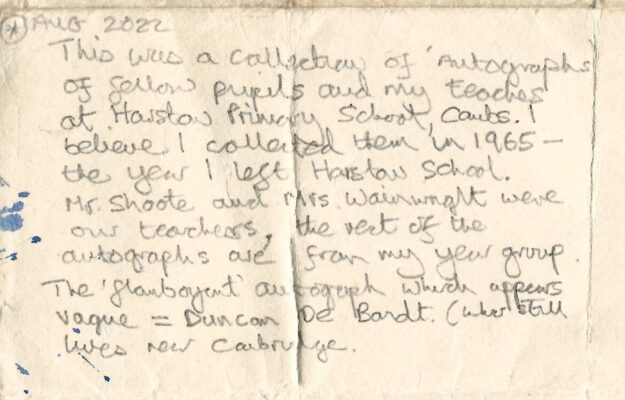
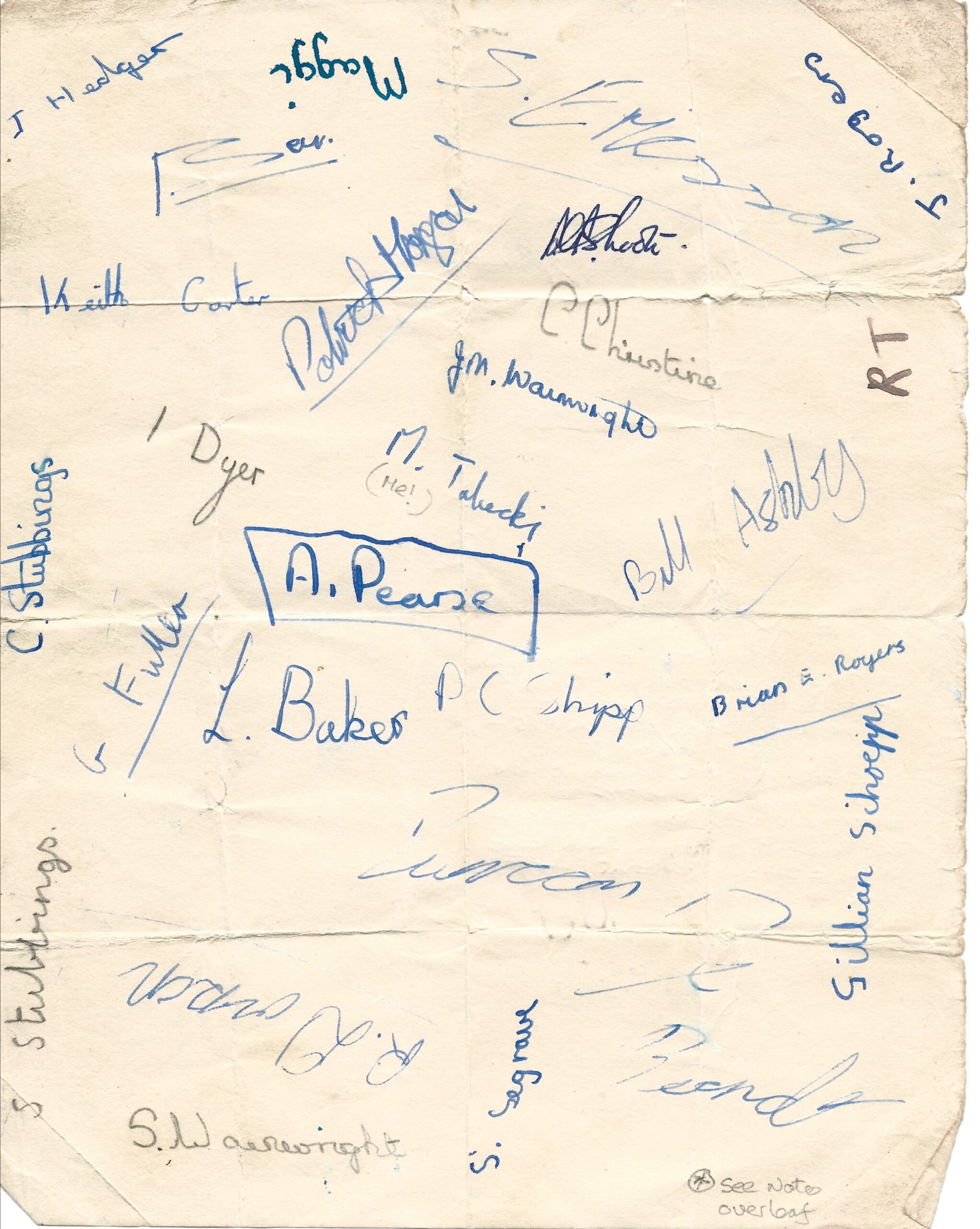
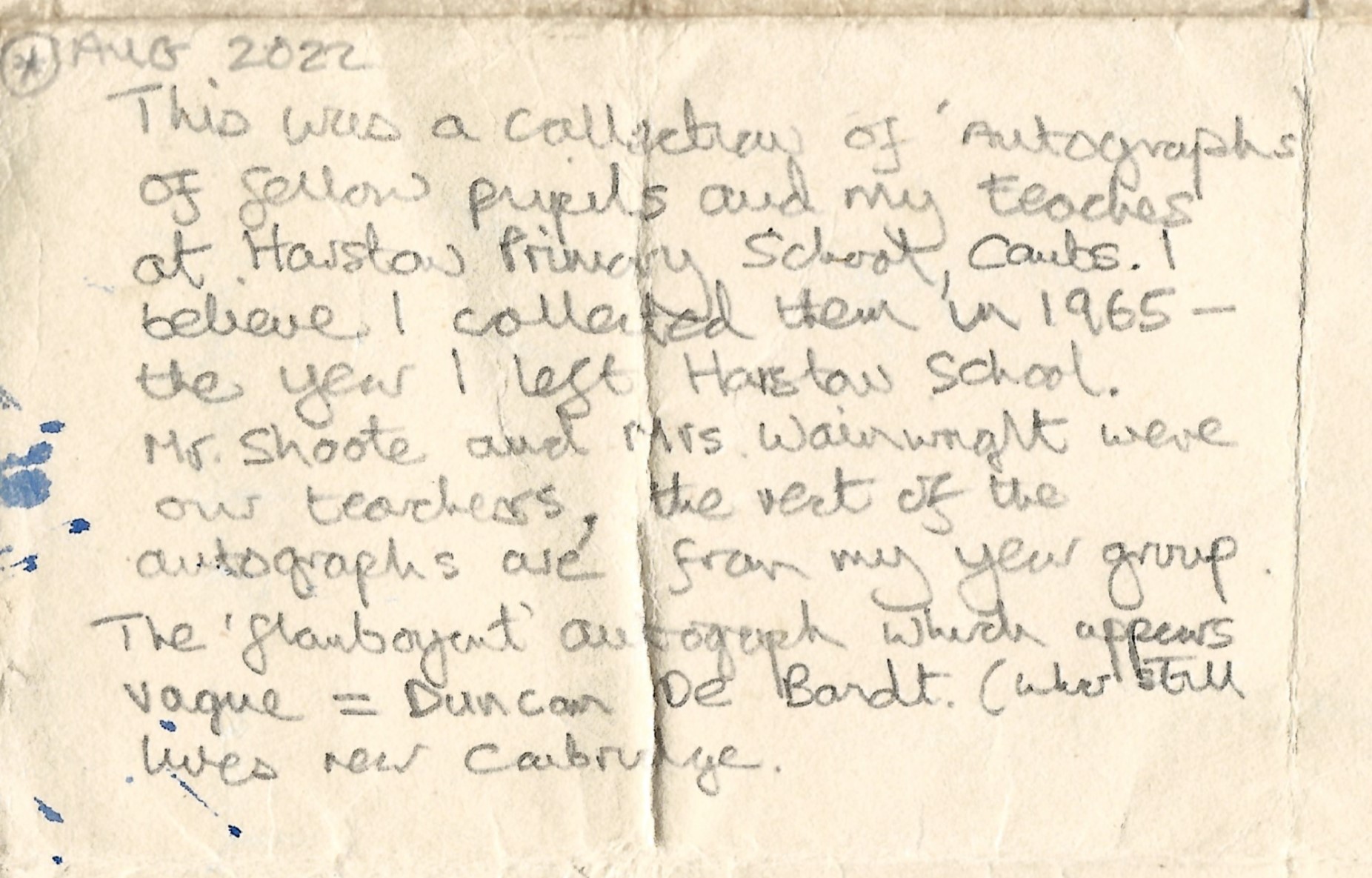
Mike Tabecki lived in the village until 1965 and went to Harston school. In 1970, as part of his GCSE Geography course at Impington Village College, he revisited Harston and wrote his project based on his memories of the village. Below are extracts from his project, in the words of a 16-year old
I chose to do my project on the village of Harston because it reminds me of some of the happy days I spent there when I was younger and of all the changes, some good, some bad, over ten years.
We used to live in one of the ‘Pest Control’-built houses on the High Street, Harston, that my parents bought from Fisons (where my father worked for most of his working life after WW2
It was originally numbered as No 80, however, this was re-numbered in the late1950’s or possibly early 1960’s to 108. We lived there from the mid 1950’s to 1965. It was a delight to read Janet Bennett’s memories of living at the same house as us, just prior to our period,
There is one spring left that I know of and that is next to a footpath, near the footpath at the bottom of Harston Hill. Harston is very different to a village like Girton because everywhere there are ditches to cope with all the water along the roads, in front of the houses everywhere. There are quite a few streams as well, especially in the south end of the village. There is one which is fairly small but has very pure water. It starts in Newton and meanders down Harston Hill under the railway and the A10 to the River Rhee. In this stream live brook trout mainly small ones but I have seen and tickled one of about one and a half pounds. In summer this stream gets really choked up with water cress mainly but there are a few other plants as well.
There is only one river that passes through Harston and that is the River Rhee on the west side of the village. The river is only about 20 feet wide at its widest point. Before 5 years ago it was possible to bathe in the river, and in safety because it was clean and clear and shallow. It was possible to walk with short trousers on up to the Mill and the water rush from the Haslingfield road bridge but the Mill owners altered things and put in a new weir. This ended with what we have now – a green coloured water. It isn’t possible to see the river bed anymore even on the shallowest run and if you tried walking up to the Mill now water would cover your head and the silt and mud would pull you under. Its that bad. Before the river had been altered crayfish could be found in abundance under the banks and rocks. This proved that the water was very pure because crayfish can only live in very pure water. As soon as the river was tampered with, the crayfish disappeared and I haven’t seen one since. The only thing that hasn’t really suffered are the fish, trout can still be caught but not so many chubb. Dace and huge gudgeon can still be caught but only small pike now. Around 8 years ago, there were many big pike of 20lbs or so were pulled out, but now only 6lbs on average. Four years ago when the floods covered all the fields, a 33ld pike was found stranded on a small island on the front of the Mill because the water dropped so quickly. Incidently the fish was put back alive. Tests on the river showed it is slightly alkaline.
Harston can still just about be called an agricultural village but it is becoming increasingly a dormitory village as the village blacksmith Harry Lawrance told me and he is very right because more and more people are going to work in Cambridge and sleep in Harston at night, that’s all. The land which is used is used for growing various crops and keeping various livestock. Crops grown in summer are wheat, barley, oats, potatoes and sometimes sweetcorn. Also there are several orchards in which are grown apples, plums and pears. In winter the crops grown are sprouts and sugar beet. The livestock that are farmed are cows (freisians and jerseys) and pigs and chickens.
Village Hall
There is a stage on which the Harston primary school present a play each year, also travelling groups perform as well. Behind the stage there is the billiards room, a small committee room for discussions and a kitchen. Most of the original groups using the hall have gone but new clubs have been started –judo club, bowls club, horticultural society, Womens Institute and a day nursery school run by Mrs Brewer. There was also a youth club and dances held for the youngsters but these also finished.
Over the past 7 years the hall has become rather neglected and, at the moment, looks rather shabby. The old bridge is now unsafe so a new bridge has been built next to it. About a year and a half ago someone realised the hall was becoming a ruin so a fund was started and at the moment the money raised is £1900 which is halfway to the target.
Baptist church
At the moment there is no resident minister and the chapel is never open except for services which are held by a neighbouring minister. It is never open otherwise because too much stuff has been stolen from it.
Public Houses
There are 5 public houses, all different from each other in age, style and size.
The Coach & Horses – Greene King own the pub and the present landlord is Mr Christine who has been there for almost 8 years. Recently they have had it done up but not modernised. It has still got beautiful bay windows with the original simple bench seats fixed to the wall skirting round the bays. The roof is very low and oak beams support the ceiling. A new, big car-park has been built, roof retiled, refloored, repainted and a new sign.
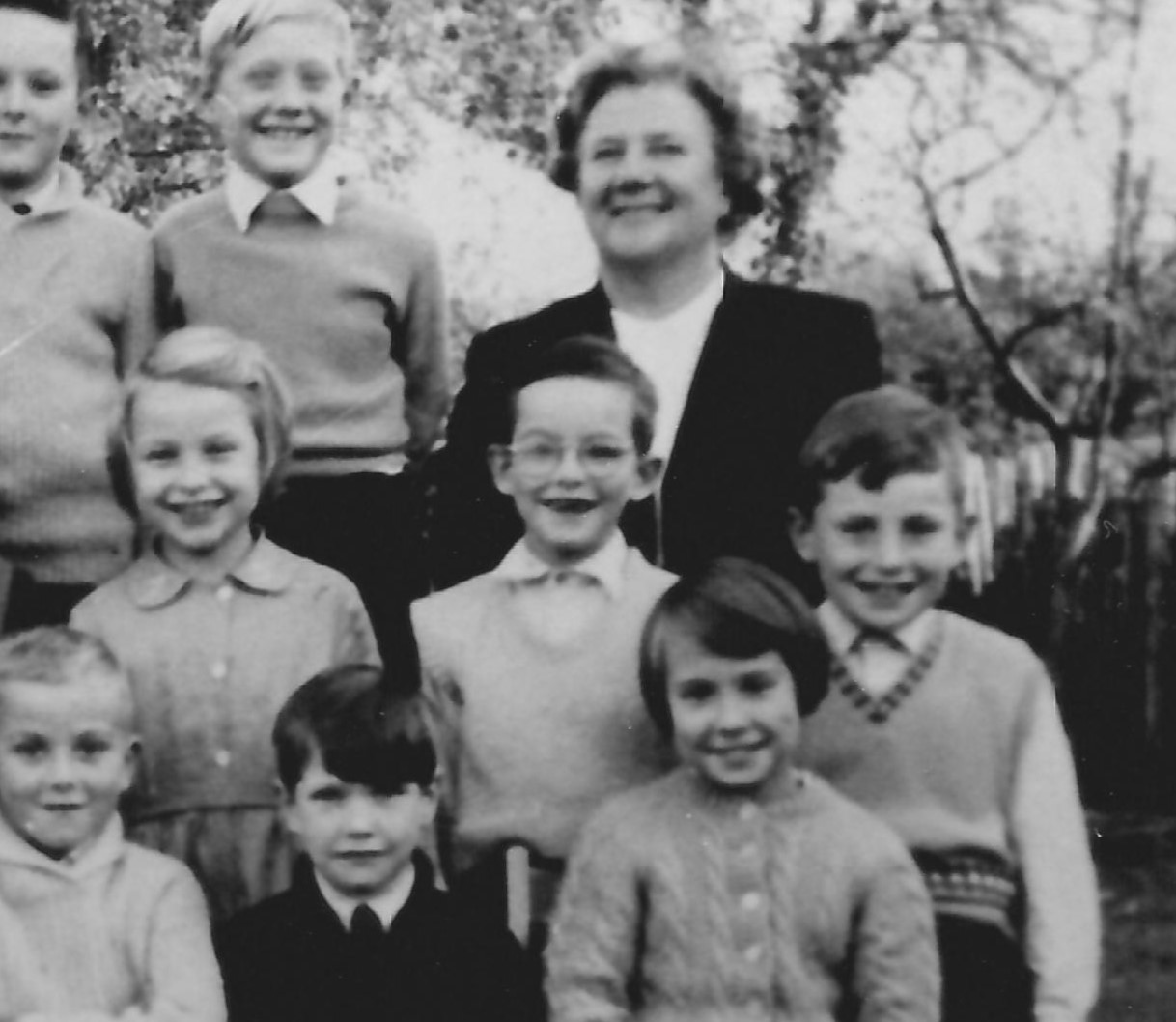
I was at Harston school with David Christine and his sister Carol so I was well acquainted with the pub. I was always around theirs playing with David, and also helping out emptying the empty bottles from the previous night’s pub activity – I still have vivid memories of the smell of beer and the large wicker baskets that were used to contain the empty bottles that were stored beneath the public bar. Mr Christine also had a side-line business of delivering wood logs to houses because I remember going on a delivery run on one occasion with David & his father..
The Queen’s Head – five years ago this was the worst looking pub in the village. It was Small, the walls were grey, the plaster was cracking and peeling off and the roof sagged. Then it was done up. The roof was fixed, an extension built on, the interior walls were knocked down, readjusted and replastered and finally all was decorated and a huge car park was made. This made the pub very smart. Greene King own it and the landlord is Mr Salter.
I also knew, and played with, Sam Salter. David Christine and Sam Salter were a significant part of our “gang” – along with Eric Pettit who lived in Church Street, and I have many fond memories of the adventures we had in the Harston area and beyond.
The Pemberton Arms – this pub has always been the best and most luxurious. It is divided into the public bar, smoke room and lounge. In the lounge dinners from menus are served by a waitress. The outside walls are always crisp white with black window trimmings. Along the roof gutter, lights of different colours shine on the pub sign also making it look very nice. Every year about 10 swallow nests can be seen under the gutter. This is probably because the lights keep the nests warm. Whitbreads own it and Mr Hawkins is the landlord.
The Old English Gentleman – the pub is owned by Tolly Cobbald and Mr R Tully is the landlord. The outside has very recently been redecorated with what I think very good and striking colours, yellow-orange walls with black window trimmings. The inside hasn’t been redecorated and only the sign has been moved and changed and a new car park built.
The Three Horseshoes – this was originally a 19th century house. When the house was sold to Greene King it was altered and made into a pub and a tea-house was made of the adjoining cottage; this tea-house closed down 2 years ago due to lack of customers. The pub has always had the same colour walls which are cream with green window trimmings. The present landlord is Mr W Grigg.
Housing
During the past 10 years over 60 council houses have been built, an extension to Queens Close for old-age pensioners has just been finished in which are 16 houses and a new estate along Station Road called The Paddock.
Less than a year and a half ago the older council houses all had outside bucket lavatories. Now all the council houses have been modernised and redecorated.
Harston County Primary School
The only library in the village, beside the school library, is in the school dining hall and it is open on Tuesday afternoons at 2pm to 5.30.
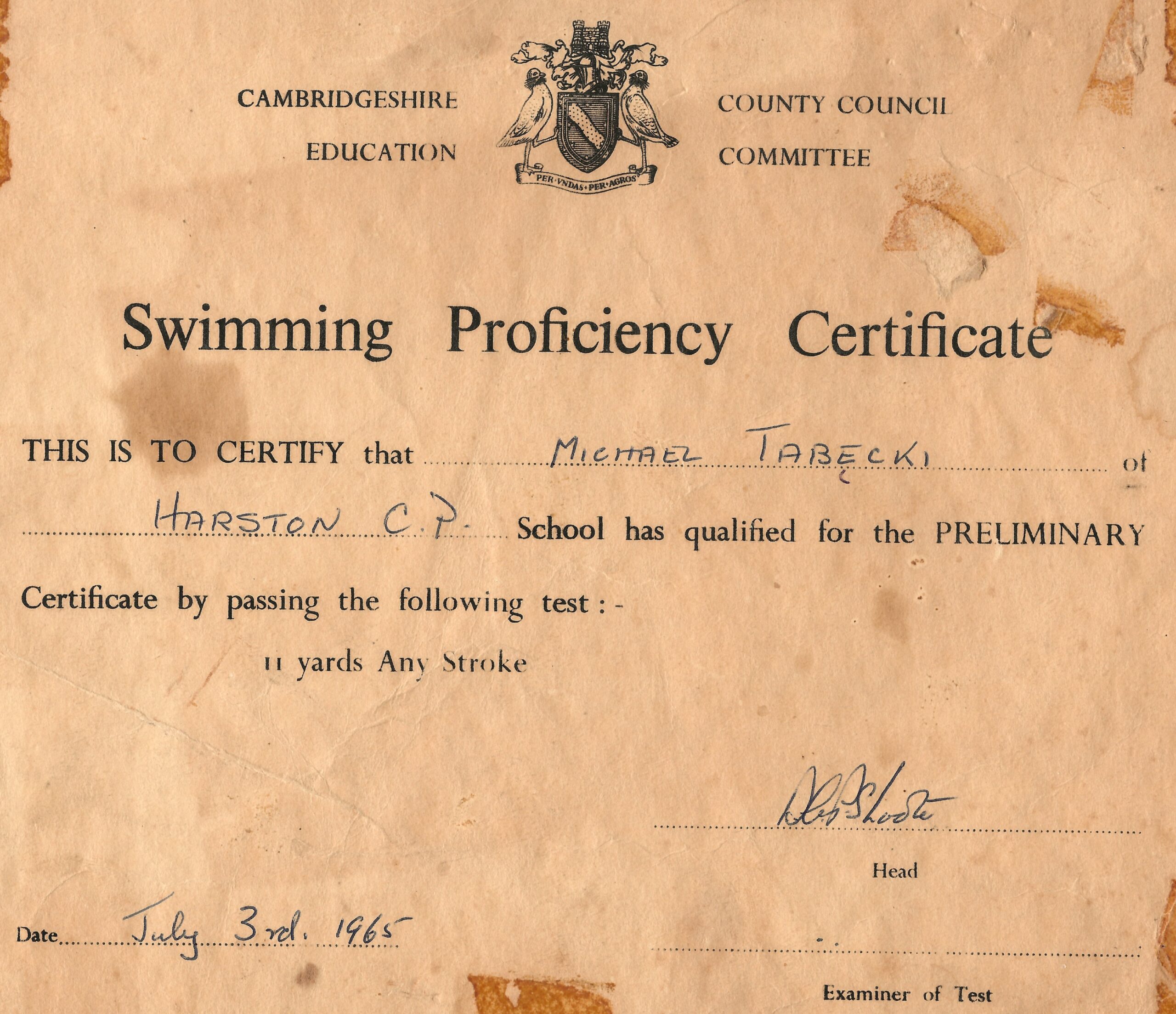
In 1964 a plan was started by the school to build a swimming pool. The money was half raised by the children’s parents contributing 5 shillings a week and the other half was paid by the council. Within a year the school had raised the money and the school got its pool which was constructed by the older children, that’s me. The pool was officially opened by the Mayor of Cambridge who threw mint 3d pieces in for some of the children to swim for.
Recently the school was donated a piece of land next to the school on Station Road which has been made into a sports ground. Before they had this, all the boys had to trudge half a mile to The Park to have games lessons.
The Headmaster is Mr Shoot who lives in Newton. He has been Head for over 15 years.
Shops
There are seven shops – 3 grocers & provisions, a mini-market with post office, a hairdressers, a clothes shop and an electrical shop.
Mr G Knights shop opposite the Coach & Horses, sells vegetables, fruits and other provisions.
Mr E W Burl’s shop has been built up to a small mini-market. It is also the post office and has been for only four years because the post office used to be next to Mr Knights shop.
Another mini-market with vegetables, fruits and provisions. The new owners D J & P Horsman completely changed it from a little village shop into a mini-market; it is a Centra shop.
Next door to Horsmans is a very small hairdressing shop called Wendys which started only a year back. The owner before that was an old lady of 60 and she was well-known to everyone in the village for giving men and boys short back and sides when they wanted only a trim. The owner now has turned the shop into a little beauty parlour where all the ladies go.
The fifth shop stands opposite the war memorial. It is a clothes shop, just the first floor of a house converted. It sells baby clothes, boys clothes, all sorts of odds and ends. The present owner is Vera, well that’s what it is called anyway.
The sixth shop is an electrical shop standing opposite Swan Green where you can buy anything from a screw to a television. The owner is Polish and is known as Bruno.
The last shop is owned by Mr N Impey. It is a little greengrocers and was originally the bakery. It stands along Church Street.
Garages
The bigger garage is Harston Motors with BP & Shell petrol. The only typesof car sold and serviced is Volvo. The other garage is owned by Mr Alan Mills, selling petrol refined by the Cleveland Petroleum Company. Second-hand cars and a few new ones can be bought. Servicing in done on all makes oc cars in the workshop which is very small and used to be the original garage. Four years ago the present forecourt with pumps and kiosk were made.
Dairy & Bakery
Both were located on the High Street. The dairy owner is Mr Bowden who supplies milk, cream and eggs. His son delivers milk in the mornings with the help of 2 young boys on Saturdays and at holiday times. The dairy house hides all the milk wagons and sheds behind it. In the sheds are 2 gigantic fridges.
The bakery lies at the back of Horsmans shop and is run by Mr Rogers. He has been the village baker for many years and sells some of his bread in Horsmans shop and with the rest he goes on his round in a blue Bedford van. The bread is made next to his house in 2 sheds with ovens. He used to run a larger bakery where Impey’s shop now is but he sold that and went where he is now.
Wren’s Chip Lorry
As there is no chip shop in Harston, a chip lorry comes round every Friday around 12 o’clock. The fish and chips are very good and tasty. The lorry used to come round on Wednesdays as well but they stopped this about 6 years ago.
Doctors
The doctors is situated next to The Coach & Horses. It is an ordinary two storey house with white walls. Inside there is the waiting room and medicine prescription room. All the rest of the rooms are doctors rooms. Altogether there are eight doctors; Drs Bunn, Webb, Simpson, Townley, Erskine, Hosking, Alderton and Pullen. None of these live in Harston except Dr Townley who lives along London Road.
Police
There is only one policeman in the village and he lives with his family in the police house on the High Street next to Mrs Collins riding stables. Up to about 2 years ago he could be seen patrolling the village on his bicycles but now he goes round in a panda car.
Bath House Hotel
This is a very large old house which stands between the post office and the village hall. It is set well back from the road and is hidden by big fine trees. It is the only hotel in the village.
Telephone Exchanges
The old exchange is still in use as the new exchange, built in 1967 has not been wired up. The new exchange will be capable of dealing with the whole district whereas the old exchange can only deal with a few phones at a time.
Bus Service
The bus service, 108, runs from Cambridge to Royston every hour, on Sundays every two hours. Another service is run by Premier Travel. It comes from Newton down Harston Hill, firstly stopping at the war memorial, then at Swan Green and then to Cambridge via Haslingfield.
Long’s Coaches, based in Manor Close, have 4 coaches and take children from Hauxton and Newton to Harston school and also children to Melbourn Village College.
Water Supply
Mr Lawrance, the blacksmith, told me that ‘Harston’s water is so good and soft that you can wash in it without using soap.’
Probably the last photos taken (by me) of Mr. Harry Lawrence the village blacksmith actually working at his forge because I believe he died a little later.
Fisons
After my father died, I took a sub-sample of his ashes on a symbolic cycle ride and I visited Fisons and significant spots from memories of our life in Harston and I sprinkled some of his ashes in each spot. In fact, on that cycle ride I took some photos of Fisons and the clubhouse that had, at that stage, had been vandalised. I remember feeling quite sad about the demise of Fisons, and the fond memories I had of playing snooker in the clubhouse; the Annual Sports Day; the family shows and pantomimes held in the clubhouse; being fascinated by the trout that were kept in aquariums in the Fisons Effluent Treatment Works. I remember there was always the “smell-of-Fisons” emanating from the discharge pipe and there was always a distinct rust-brown to yellow stain zone downstream from the actual discharge pipe!! These trout were used to test the purity of the treated effluent water before it was eventually discharged back into the river very close to the road bridge near the mill.
My father used to bring the trout home for us to eat when they got too big for the aquariums!!! He was supposed to dispose of them rather than eat them!!! However, in those days there wasn’t the same levels of Health & Safety that exist today. While I remember, I can also tell you that my father died of bladder cancer and when the Doctors at Addenbrookes asked what my father did for work and I told them that he worked in formulating agrochemicals at Fisons, they were not surprised that he had bladder cancer – I got the knowing “aaah, yes” response! It would be interesting to know whether there were other Fisons employees who succumbed to this too.
No Comments
Add a comment about this page